
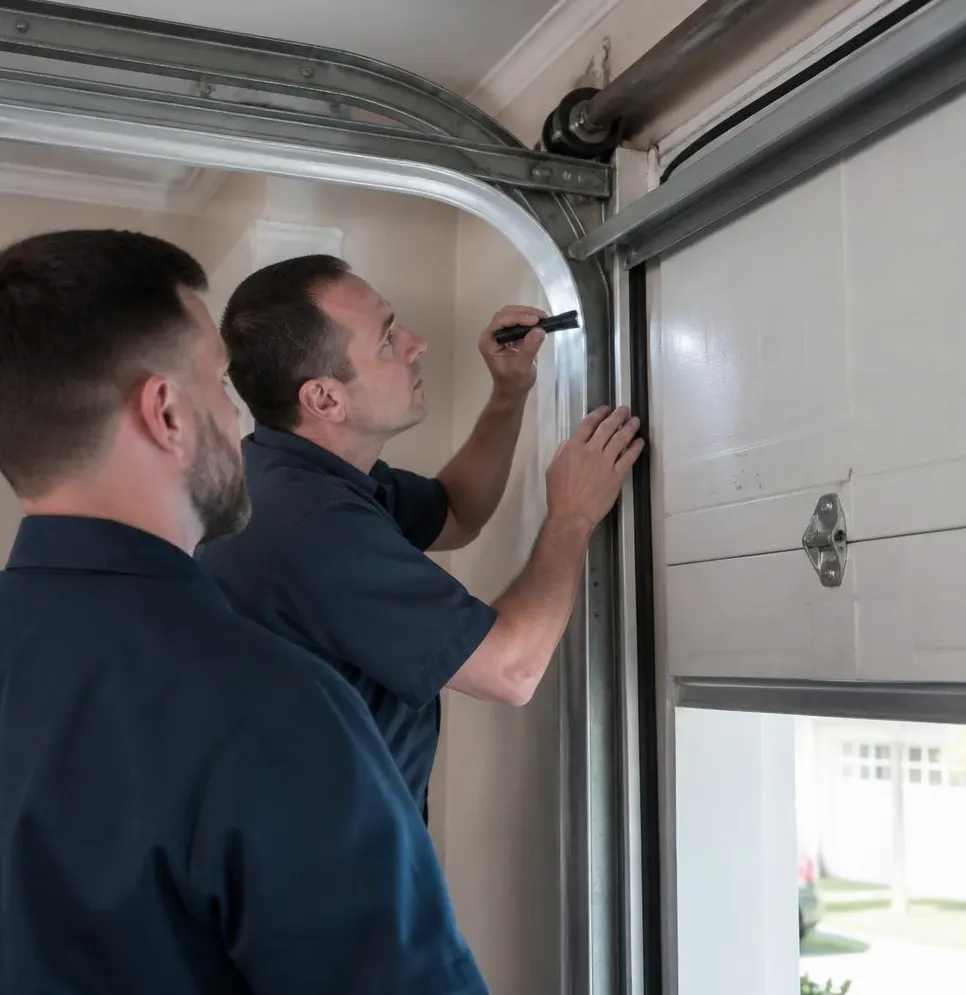
The Short Answer
Getting a garage door ready for winter means checking the weatherstripping, testing the springs and balance, lubricating the moving parts, and making sure the opener and safety sensors still work correctly once temperatures drop. Do this in October or early November, before the first hard freeze locks everything in place and before road salt starts eating at your hardware.
Winters in this part of Illinois swing from wet and muddy to bitterly cold with ice on the slab almost overnight. That kind of swing is hard on a garage door system, and most of the damage happens quietly over weeks, not all at once during one storm. A little attention now saves you from a dead opener or a snapped spring on the coldest morning of the year.
Check the Weatherstripping Before the Cold Locks It In
The rubber seal along the bottom of your garage door and around the sides is the only thing keeping snowmelt, slush, and cold air out of the garage. Rubber that's already cracked or flattened in October will get worse, not better, once it's frozen stiff for months.
- Run your hand along the bottom seal. If it's hard, brittle, or torn in spots, it needs replacing now while it's still flexible enough to install cleanly.
- Look for daylight gaps along the sides and top when the door is closed. Gaps let in drafts, meltwater, and the fine road salt that blows in off driveways and gets tracked in on tires.
- If your garage is attached to the house, a failing seal isn't just a garage problem — it's letting cold air into a shared wall, which can show up as a chillier mudroom or laundry room all winter.
Test the Balance and Listen to the Springs
Garage door springs do the heavy lifting, and steel springs behave differently in the cold. Metal contracts, lubricant thickens, and a spring that was already a little worn in September can fail outright in January. This is one of the most common emergency calls garage door companies get during the first real cold snap.
- Disconnect the opener (pull the release cord) and lift the door by hand. It should move smoothly and stay roughly in place when you let go halfway up. If it slams down or feels heavy, the spring tension is off.
- Listen for grinding, popping, or a door that jerks instead of moving smoothly — these are early warning signs, not something to wait out.
- Never try to adjust or replace a torsion spring yourself. They're under heavy tension and are one of the few home repairs that genuinely belong to a professional.
Lubricate Before Everything Stiffens Up
Cold makes standard grease and old lubricant thick and sluggish, which puts extra strain on the opener motor and the rollers. A light garage-door-specific lubricant (not WD-40, which doesn't hold up well in cold) on the hinges, rollers, and tracks makes a real difference once temperatures drop into the teens and single digits.
- Wipe down tracks first to clear out summer dust and any grit that's worked in over humid months.
- Lubricate hinges, rollers, and the torsion bar bearings — skip the actual springs unless the manufacturer specifies it.
- Do this before the first deep cold snap. It's much harder to work lubricant into stiff, cold metal than into parts that are still at a reasonable temperature.
Protect Against Salt and Slush
Road salt and the slush that collects at the bottom of a driveway are quietly corrosive to the metal tracks, rollers, and the bottom panel of the door itself.
- Hose off the bottom section of the door and the tracks periodically through the winter, especially after a thaw when salt residue is most concentrated.
- Check for rust starting at the bottom corners of a steel door — this is where moisture sits longest.
- If you park a vehicle in the garage, give tires a minute to drip before pulling all the way in, so less salt-laced slush ends up pooling near the door track.
Make Sure the Opener and Sensors Still Work in the Cold
Cold weather is tough on electronics and on the photo-eye safety sensors mounted near the floor on each side of the door.
- Test the auto-reverse safety feature by placing a piece of wood in the door's path and closing it — it should reverse immediately on contact.
- Check that the sensor lenses are clean and aligned; a sensor bumped out of alignment during fall cleanup (leaf blowers, ladders, holiday decorations) can cause the door to refuse to close once it's cold and dark earlier in the evening.
- If you rely on a battery backup for the opener, test it now. Winter storms here can knock out power, and a dead backup battery means a garage door you can't open by remote when you need it most.
When to Call Durand Garage Door Pro
If your door is slamming, grinding, hanging unevenly, or the opener strains to lift it, that's a sign the spring tension has already shifted and it's time for a proper look rather than more DIY lubrication. Our Spring Replacement service handles this safely with the right tools and tension settings for your door's weight, so you're not stuck with a failed spring during a cold snap. If the issue is more about reliability — a door that hesitates, sensors that act up in the cold, or an opener that's just getting old — our Garage Door Maintenance visits cover a full inspection of the hardware, weatherstripping, and opener system so small issues get caught before they turn into an emergency call at 6am in January.
If you're anywhere around Durand, Rockton, Pecatonica, Roscoe, Winnebago, South Beloit, or Rockford and want your garage door checked before winter settles in for good, call Durand Garage Door Pro. We'll get it running right before the ice does.